Latest stories

Ophiuchus

O

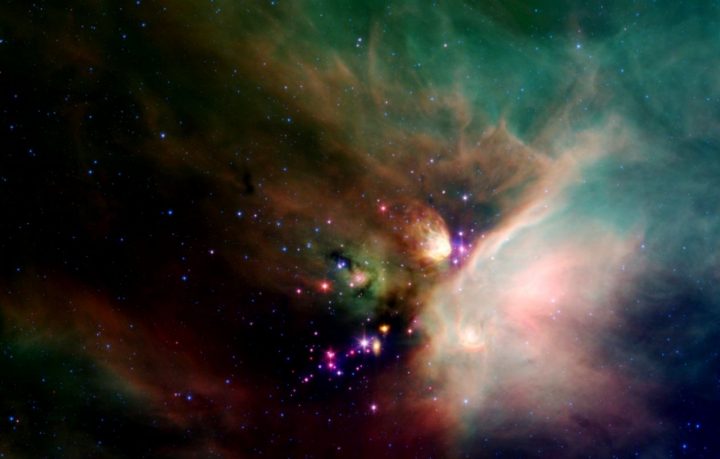
Ophiuchus (known as the serpent holder) is one of the 88 constellations, and was also one of the 48 listed by Ptolemy. Of the 13 zodiac constellations (constellations that can contain the Sun during the course of a year), Ophiuchus is the only one which is not counted as an astrological sign. Ophiuchus is depicted as a man supporting a snake, Serpens; the interposition of his body divides the...
Nibiru

N

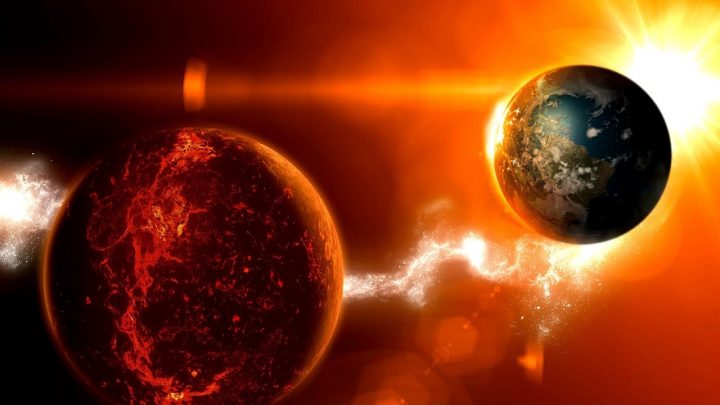
The legend of Nibiru, or Planet X (above and below, the hourglass of physical reality), is a myth brought forth to awaken human consciousness in end times. Nibiru, in Babylonian Astronomy translates to “Planet of Crossing” or “Point of Transition”, especially of rivers, i.e. river crossings or ferry-boats, a term of the highest point of the ecliptic, i.e. the...

New Planets

N

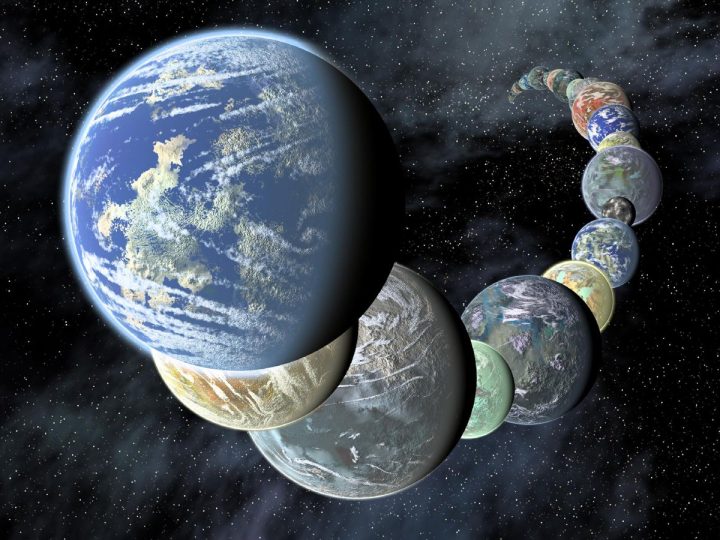
This Newfound Alien Planet Has 3 Suns Space.com – July 27, 2019 Astronomers think they’ve spotted an alien planet with three suns on its horizon ر but that still isn’t the most interesting thing about the strange new world’s sky. Scientists found the world, which they’ve dubbed LTT 1445Ab, in data gathered by NASA’s Transiting Exoplanet Survey Satellite (TESS)...

Neutrinos

N

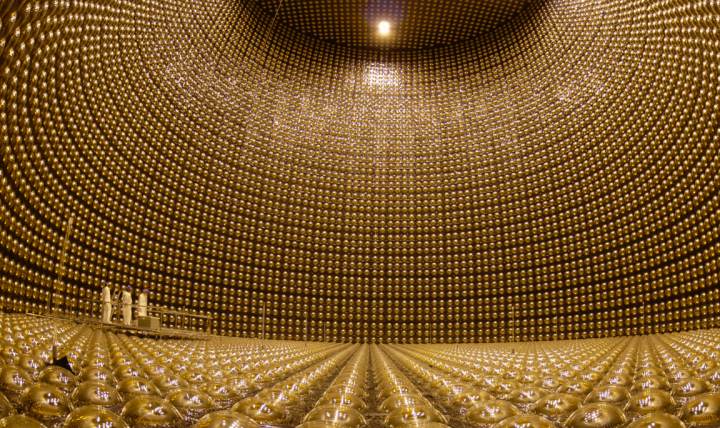
The neutrino is an elementary particle. It has fractional spin and is therefore a fermion. Its mass is very small compared to most other particles, although recent experiments (see Super-Kamiokande and Sudbury Neutrino Observatory) have shown it to be nonzero. Since it is an electrically neutral lepton, the neutrino interacts neither by way of the strong nor the electromagnetic force, but only...

Neptune

N

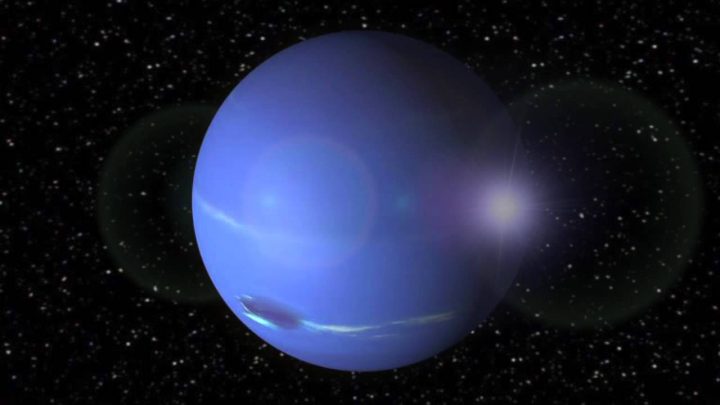
 Size: 49 500 km diameter (3.9 x Earth)  Surface Temperature: -240°C  Atmosphere: 86 parts Hydrogen 19 parts Helium 1 part Methane  Spin: 16 hours 7 minutes  Year: 163 years 9 months  Moons: Naiad Thalassa Depoina Galatea Larissa Proteus Triton Nereid Neptune is the eighth or, occasionally, the ninth planet from the Sun due to Pluto’s eccentric orbit, and the...

Music of the Spheres

M

Musica Universalis or Music of the Spheres is an ancient philosophical concept that regards proportions in the movements of celestial bodies – the sun, moon, and planets – as a form of musica – the medieval Latin name for music. This music is not audible, but simply a mathematical concept. The Greek philosopher Pythagoras is frequently credited...

Earth’s Moon

E

The Moon is an astronomical body that orbits planet Earth and is Earth’s only permanent natural satellite. It is the fifth-largest natural satellite in the Solar System, and the largest among planetary satellites relative to the size of the planet that it orbits (its primary). The Moon is after Jupiter’s satellite Io the second-densest satellite in the Solar System among those whose...

Meteoroid, Meteors, and Meteorites

M

A meteoroid is a small rocky or metallic body travelling through space. Meteoroids are significantly smaller than asteroids, and range in size from small grains to 1 meter-wide objects. Most are fragments from comets or asteroids, while others are collision impact debris ejected from bodies such as the Moon or Mars. The visible streak of light from space debris is the result of heat as it enters...

Mercury

M

Mercury is the innermost planet in the Solar System. It is also the smallest, and its orbit is the most eccentric (that is, the least perfectly circular) of the eight planets. It orbits the Sun once in about 88 Earth days, completing three rotations about its axis for every two orbits. The planet is named after the Roman god Mercury, the messenger to the gods. Mercury’s surface is heavily...

Could Life Have Evolved on Mars Before Earth?

C

March 13, 2013 Martians … Entities from Mars … are all part of the things we read about or see in media. We find references to Martians in films, literature, channelings, art, alien abductions, and perhaps physical evidence found across the landscape of planet Earth and below the surface. Many believe. Others don’t. None of it seems important without the physical proof so many...