Latest stories

Sedna

S

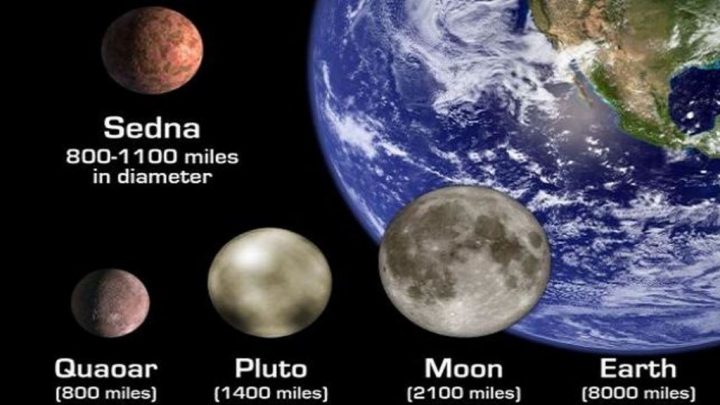
90377 Sedna is a large minor planet in the outer reaches of the Solar System that was, as of 2015, at a distance of about 86 astronomical units (AU) from the Sun, about three times as far as Neptune. Spectroscopy has revealed that Sedna’s surface composition is similar to that of some other trans-Neptunian objects, being largely a mixture of water, methane, and nitrogen ices with tholins...
Saturn

S

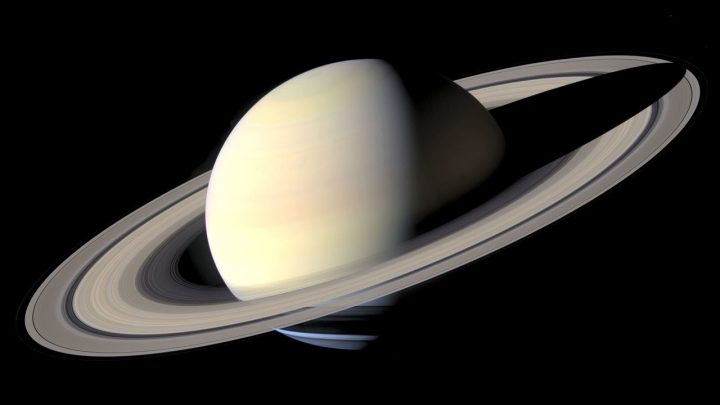
Saturn is the sixth planet from the Sun and the second largest planet in the Solar System, after Jupiter. Saturn is named after the Roman god Saturn, equated to the Greek Cronus (the Titan father of Zeus), the Babylonian Ninurta and the Hindu Shani. Saturn’s symbol represents the Roman god’s sickle. Saturn, along with Jupiter, Uranus and Neptune, is classified as a gas giant...

Rigel

R

Rigel is the brightest star in the constellation Orion and the sixth brightest star in the sky, with visual magnitude 0.18. Although it has the Bayer designation “beta”, it is almost always brighter than Alpha Orionis (Betelgeuse). Rigel is well beyond the current range of accurate parallax measurements; spectroscopic estimates place its distance between 700 and 900 light-years (210...

Precession of the Equinoxes

P

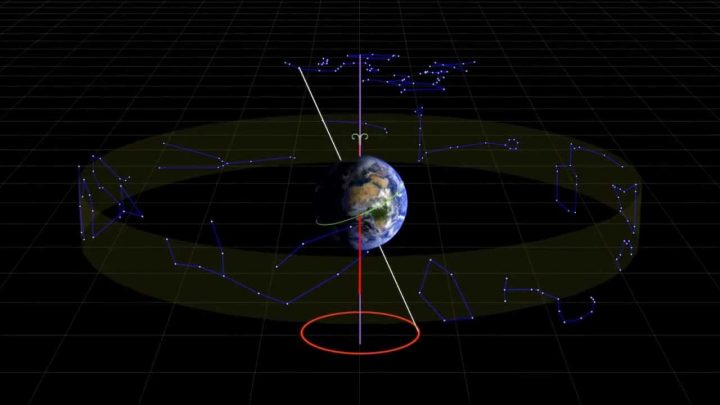
In astronomy, axial precession is a gravity-induced, slow and continuous change in the orientation of an astronomical body’s rotational axis. In particular, it refers to the gradual shift in the orientation of Earth’s axis of rotation, which, like a wobbling top, traces out a pair of cones joined at their apices in a cycle of approximately 26,000 years (called a Great or Platonic Year...

Pluto

P

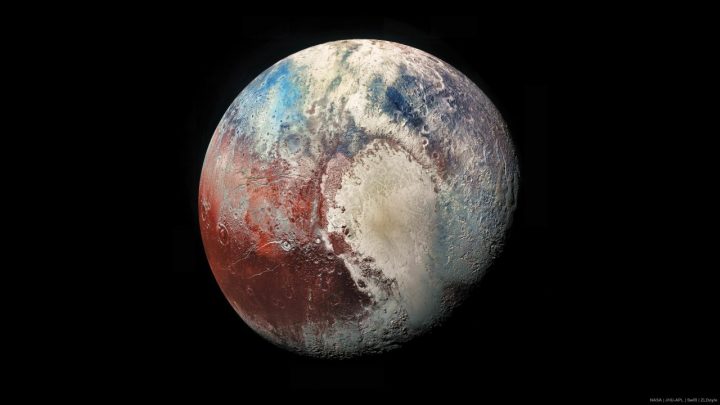
Pluto is the second-most massive known dwarf planet, after Eris. It is the largest object in the Kuiper belt and possibly the largest known trans-Neptunian object by volume. It is the tenth-most-massive known body directly orbiting the Sun. Like other Kuiper belt objects, Pluto is primarily made of rock and ice, and is relatively small- about 1Ú6 the mass of the Moon and 1Ú3 its volume. It has a...

Pleiades

P

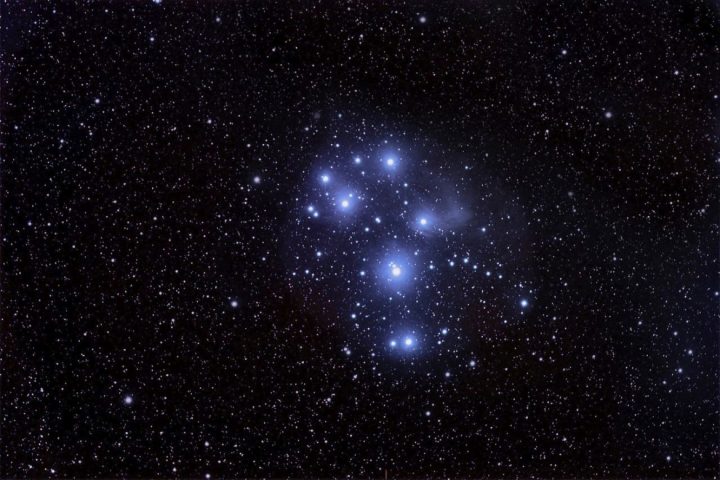
The Pleiades also known as the Seven Sisters and Messier 45), are an open star cluster containing middle-aged, hot B-type stars located in the constellation of Taurus. It is among the nearest star clusters to Earth and is the cluster most obvious to the naked eye in the night sky. The cluster is dominated by hot blue and extremely luminous stars that have formed within the last 100 million years...

Photon Belt

P

The Photon Belt (also called the photon band, photon ring, manasic ring, manasic radiation, manasic vibration, golden ring, or golden nebula) is a spiritual belief, largely linked to some parts of the New Age Movement. It postulates that a belt or ring of photons is going to envelop the Earth, causing a cataclysm and/or initiating a spiritual transition, with the time period leading up to...

Pegasus Constellation

P

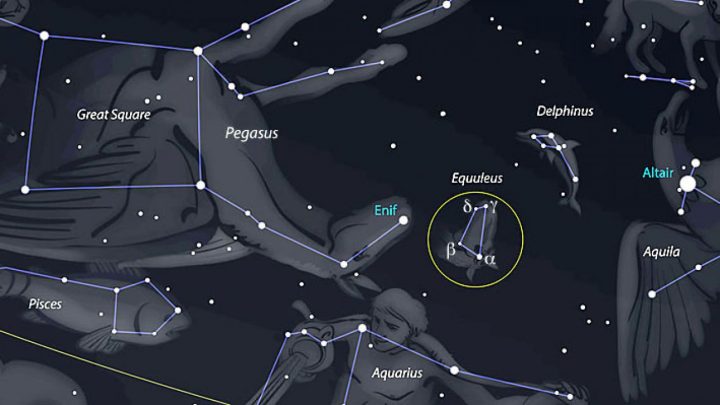
Pegasus is a northern northern sky, named after the winged horse Pegasus in Greek mythology. It was one of the 48 constellations listed by the 1st century astronomer Ptolemy, and remains one of the 88 modern constellations. It is one of the 88 modern constellations, and was also one of the 48 constellations listed by Ptolemy. Its three brightest stars together with Alpha Andromedae form the large...

‘Oumuamua: Asteroid? Comet? Alien Solar Sail?

&

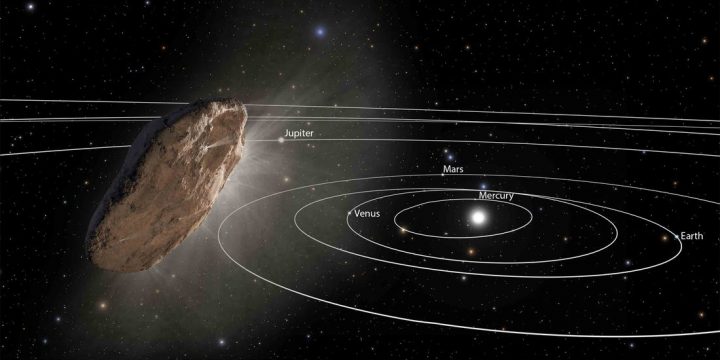
This is not a UFO but stretches the imagination so one can believe. No entities. Check it out. If anything it’s a probe. ‘Oumuamua is the first interstellar object detected passing through the Solar System. It is a small stellar object that some think could be a UFO or solar sail send to explore outer space. Formally designated 1I/2017 U1, it was discovered by Robert Weryk using the...

Orion

O

Orion’s Official Star Names APOD – December 4, 2016 Betelgeuse, alternatively by its Bayer designation Alpha Orionis, is a massive M-type red supergiant star nearing the end of its life. When it explodes it will even be visible during the day. It is the second brightest star in Orion, and is a semiregular variable star. It serves as the “right shoulder” of the hunter it...