CategoryTechnology

Taurus Constellation

T

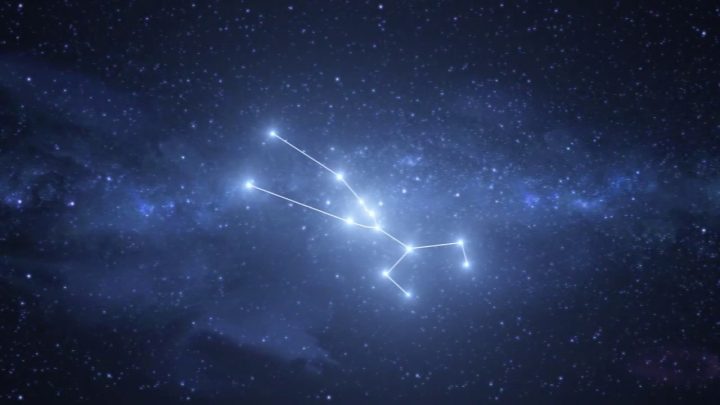
aurus is the second sign of the zodiac. Its name is Latin for Bull. The sun passes through this constellation from mid-May to late June; therefore its best observed in the early wintertime. The red star alpha Tau, called Aldebaran, represents the glowing eye of the bull and white star beta Tau, called El Nath is thought to be the pushing horn. The open cluster of the Hyades forms the head. The...
Supernovae

S

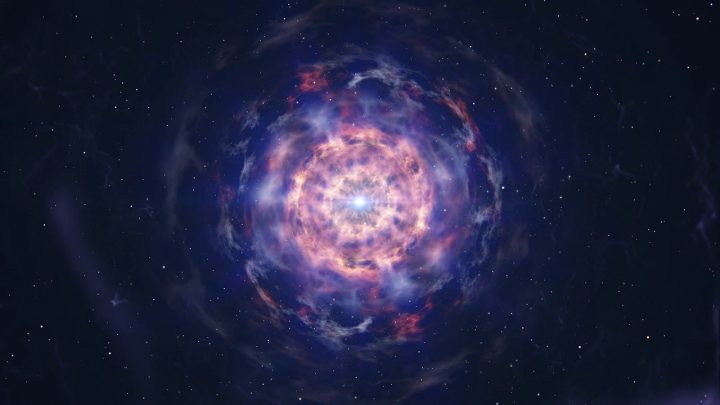
A supernova is a stellar explosion that is more energetic than a nova. Supernovae (plural) are extremely luminous and cause a burst of radiation that often briefly outshines an entire galaxy, before fading from view over several weeks or months. During this short interval a supernova can radiate as much energy as the Sun is expected to emit over its entire life span. Several large stars within...

The Sun

T

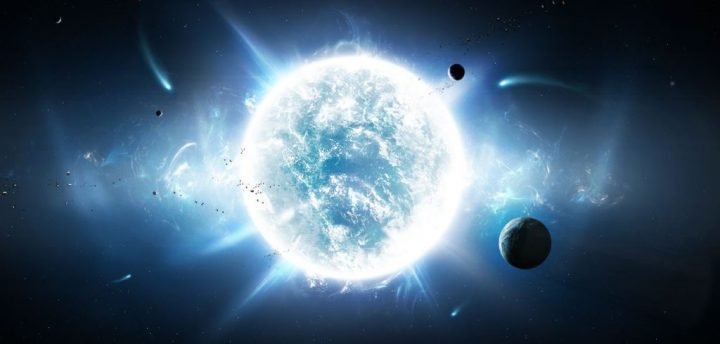
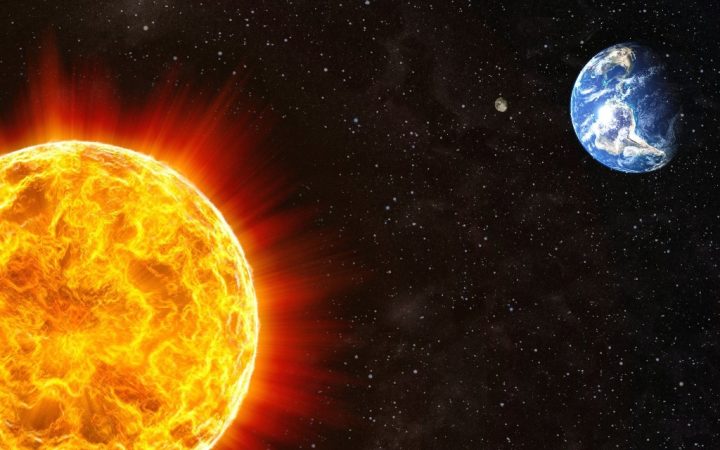
The Sun is the closest star to Earth. The Sun is a huge mass of hot, glowing gas. The Sun is a huge mass of hot, glowing gas. The strong gravitational pull of the Sun holds Earth and the other planets in the solar system in orbit. The Sun’s light and heat influence all of the objects in the solar system and allow life to exist on Earth. The Sun is an average star its size, age, and...

Stars

S

People look at the sky for many reasons. For the Astronomer it’s a journey filled with endless possibilities. For the Cosmologist it’s about creation and what lies beyond. There’s mythology linked with the constellations, folklore, history, and archaeoastronomy that link humanity to the heavens, as if it is all connected by a sacred geometric stream of consciousness. Some love...

Space Tornado

S

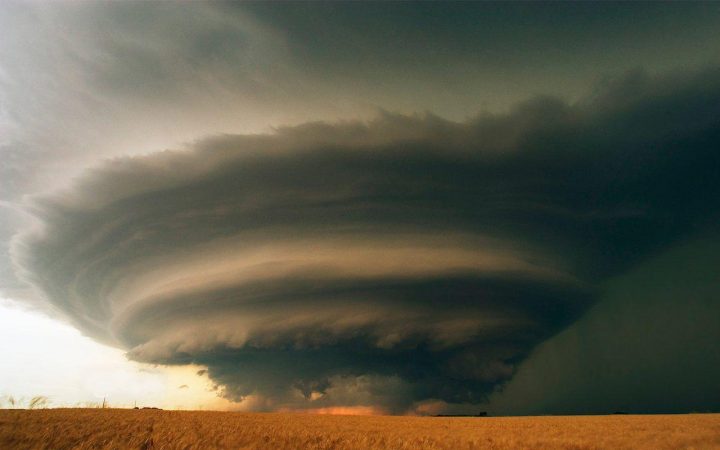
A space tornado is solar windstorm and is exponentially larger and more powerful than conventional tornadoes on Earth. They are also thought to produce the aurora borealis phenomenon. Tornadoes on Earth are formed by the atmosphere and sometimes having precipitation, while space tornadoes are formed by magnetic fields and with plasma. Space tornadoes are made up of plasmas, consisting of...

Solar System

S

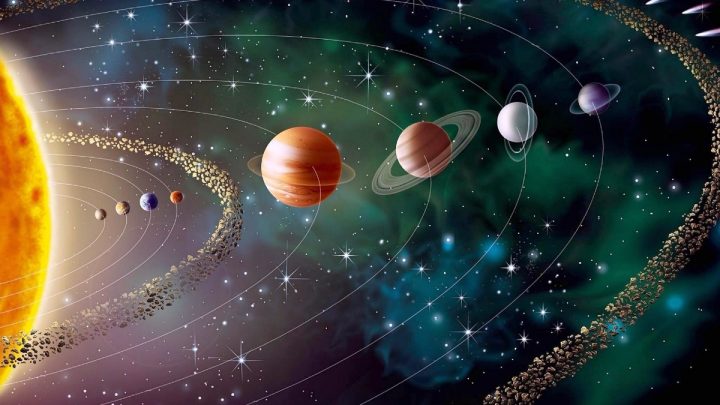
The Solar System consists of the Sun and the astronomical objects bound to it by gravity, all of which formed from the collapse of a giant molecular cloud approximately 4.6 billion years ago. Of the many objects that orbit the Sun, most of the mass is contained within eight relatively solitary planets whose orbits are almost circular and lie within a nearly flat disc called the ecliptic...

Sirius

S

Sirius is the brightest star in the night sky. With a visual apparent magnitude of -1.46, it is almost twice as bright as Canopus, the next brightest star. The name “Sirius” is derived from the Ancient Greek Seirios (“glowing” or “scorcher”). The star has the Bayer designation Alpha Canis Majoris. What the naked eye perceives as a single star is actually a...

Sedna

S

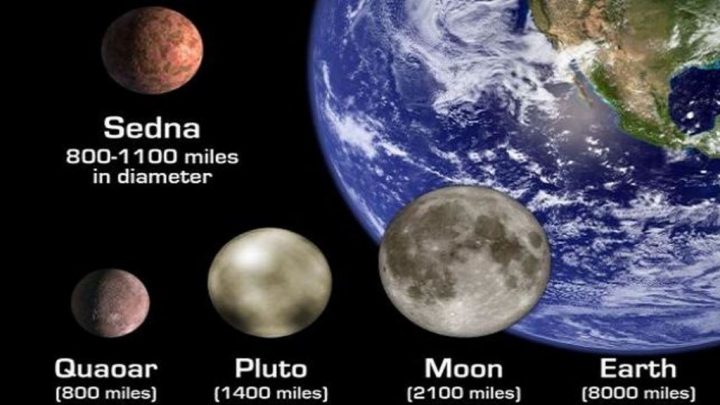
90377 Sedna is a large minor planet in the outer reaches of the Solar System that was, as of 2015, at a distance of about 86 astronomical units (AU) from the Sun, about three times as far as Neptune. Spectroscopy has revealed that Sedna’s surface composition is similar to that of some other trans-Neptunian objects, being largely a mixture of water, methane, and nitrogen ices with tholins...

Saturn

S

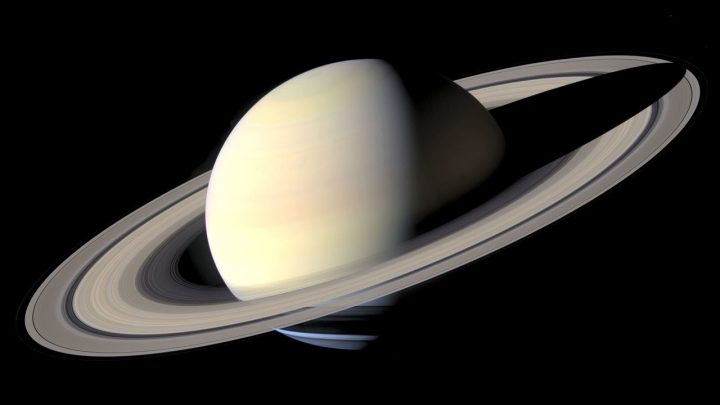
Saturn is the sixth planet from the Sun and the second largest planet in the Solar System, after Jupiter. Saturn is named after the Roman god Saturn, equated to the Greek Cronus (the Titan father of Zeus), the Babylonian Ninurta and the Hindu Shani. Saturn’s symbol represents the Roman god’s sickle. Saturn, along with Jupiter, Uranus and Neptune, is classified as a gas giant...

Rigel

R

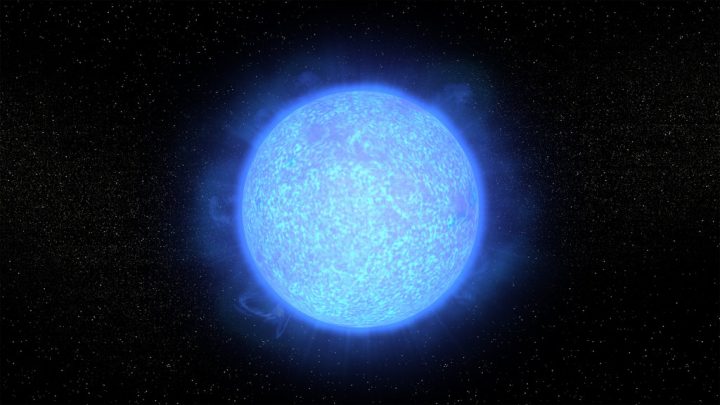
Rigel is the brightest star in the constellation Orion and the sixth brightest star in the sky, with visual magnitude 0.18. Although it has the Bayer designation “beta”, it is almost always brighter than Alpha Orionis (Betelgeuse). Rigel is well beyond the current range of accurate parallax measurements; spectroscopic estimates place its distance between 700 and 900 light-years (210...