Claudius Ptolemaeus, known in English as Ptolemy, was an ancient geographer, astronomer, and astrologer who probably lived and worked in Alexandria, off the coast of Egypt. Ptolemy was the author of several scientific treatises, two of which have been of continuing importance to later Islamic and European science. One is the astronomical treatise that is now known as the Almagest and the other is...
posidonius
Posidonius “of Rhodes” or, alternatively, “of Apameia” (ca. 135 BCE – 51 BCE), was a Greek Stoic philosopher, politician, astronomer, geographer, historian, and teacher. He was acclaimed as the greatest polymath of his age. Posidonius (also spelled Poseidonius), nicknamed “the Athlete”, was born to a Greek family in Apamea, a Roman city on the river...
Greek wars
Wars were very common in ancient Greece. The Greeks lived in little city-states, each one like a small town in the United States today, with no more than about 100,000 people in each city-state. These city-states – Athens, Sparta, Corinth, Thebes – were always fighting each other over their borders. Often they would get together in leagues, a lot of city-states together, to fight as...
Neutrinos
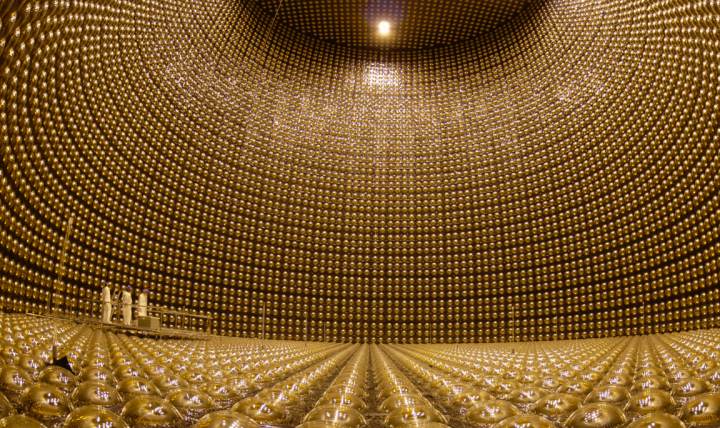
The neutrino is an elementary particle. It has fractional spin and is therefore a fermion. Its mass is very small compared to most other particles, although recent experiments (see Super-Kamiokande and Sudbury Neutrino Observatory) have shown it to be nonzero. Since it is an electrically neutral lepton, the neutrino interacts neither by way of the strong nor the electromagnetic force, but only...
Ancient Greek Poets
Hellenistic Poetry Poetry flourished in Alexandria in the third century BC. The chief Alexandrian poets were Theocritus, Callimachus, and Apollonius of Rhodes. Theocritus, who lived from about 310 to 250 BC, invented a new genre of poetryÑbucolic, a genre that the Roman Virgil would later imitate in his Eclogues. Callimachus, who lived at the same time as Theocritus, worked his entire adult life...
Neptune
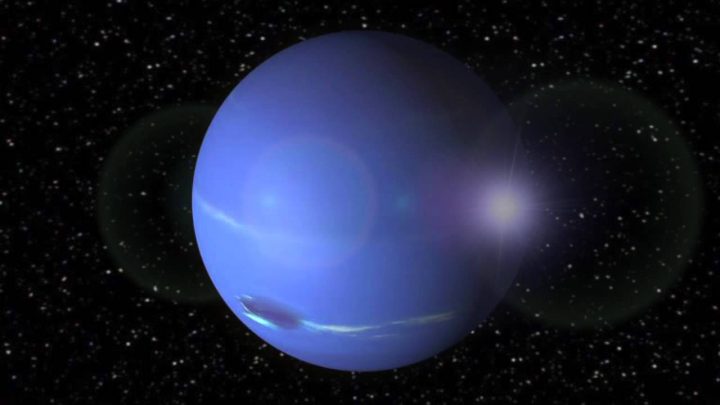
Size: 49 500 km diameter (3.9 x Earth) Surface Temperature: -240°C Atmosphere: 86 parts Hydrogen 19 parts Helium 1 part Methane Spin: 16 hours 7 minutes Year: 163 years 9 months Moons: Naiad Thalassa Depoina Galatea Larissa Proteus Triton Nereid Neptune is the eighth or, occasionally, the ninth planet from the Sun due to Pluto’s eccentric orbit, and the...
Ancient Greek Philosophy
Classical (or “early”) Greek philosophy focused on the role of reason and inquiry. In many ways it paved the way both to modern science and to modern philosophy. Clear unbroken lines of influence lead from early Greek philosophers, through early Muslim philosophy to the Renaissance, the Enlightenment, and the secular sciences of the modern day. Pre-Socratic Philosophers The history of...
phaistos disk
Phaistos – also Phaestos and Phaestus – was an ancient city on the island of Crete. Map of Minoan CretePhaistos was located in the south-central portion of the island, about 3 1/2 miles from the sea. It was inhabited from about 4000 BC. A palace, dating from the Middle Bronze Age, was destroyed by an earthquake during the Late Bronze Age. Knossos and other Minoan sites were also...
pericles
was a prominent and influential Greek statesman, orator and general of Athens during its golden age Ð specifically the time between the Persian and Peloponnesian wars. He was descended, through his mother, from the powerful and historically influential Alcmaeonid family. Pericles had such a profound influence on Athenian society that Thucydides, a contemporary historian, acclaimed him as...
greek olympics
The Olympic Games, or Olympics, is an international multi-sport event taking place every four years and comprising summer and winter games. Originally held in ancient Greece, they were revived by a French nobleman, Pierre Fredy, Baron de Coubertin in the late 19th century. The Games of the Olympiad, better known as the Summer Olympics, have been held every fourth year since 1896, with the...