AuthorHMS

Haiku

H

Haiku is one of the most important forms of traditional Japanese poetry. It should register or indicate a moment, sensation, impression or drama of a specific fact of nature. Some people meditate to create inspirational Haiku. Haiku is a very short poetic form. Traditional Japanese haiku consisted of three lines of 5, 7, and 5 units each, which are generally applied as syllables and contained a...

Japanese Gods and Goddesses

J

Japanese Gods:Aji-Suki-Taka-Hi-Kone– god of thunderAmatsu Mikaboshi– god of evilBishamon– god of happiness and warChimata-No-Kami– god of crossroads, highways and footpathsHiruko– solar godHo-Masubi– god of fireInari– god of rice (foxes are his messangers)Izanagi– creator godKagu-Zuchi– god of fireKawa-no-Kami– god of riversKura...

Japanese Creational Myths

J

In Japanese mythology, the Japanese creation myth (Tenchikaibyaku lit. “creation of heaven and earth”), is the story that describes the legendary birth of the celestial and earthly world, the birth of the first gods and the birth of the Japanese archipelago. This story is described first hand at the beginning of the Kojiki, the first book written in Japan (712), and in the Nihon Shoki...

Pegasus Constellation

P

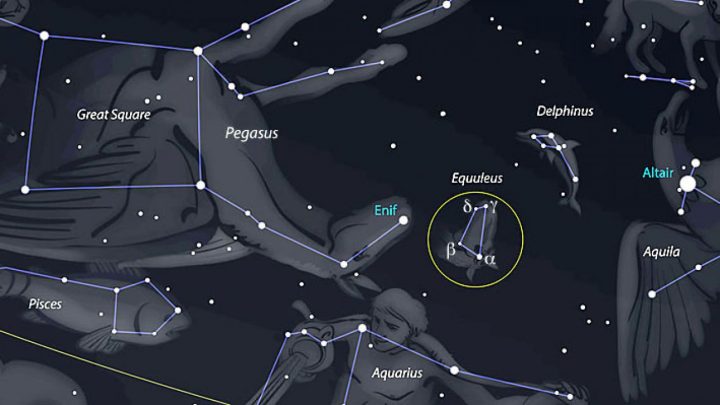
Pegasus is a northern northern sky, named after the winged horse Pegasus in Greek mythology. It was one of the 48 constellations listed by the 1st century astronomer Ptolemy, and remains one of the 88 modern constellations. It is one of the 88 modern constellations, and was also one of the 48 constellations listed by Ptolemy. Its three brightest stars together with Alpha Andromedae form the large...

Astronomy and Mythology in Ancient Japan

A

Stars that played a significant role in the lives of common citizens in Japan were often given the distinction of being called Yowatashi Boshi or passing the night stars. This phrase was applied to prominent star groups which would appear in the East at sunset and set with the dawning sun. Orion is certainly one of the most noticeable Yowatashi Boshi in the sky. In most every culture, it is...

Ancient Japan

A

The history of Japan encompasses the history of the islands of Japan and the Japanese people, spanning the ancient history of the region to the modern history of Japan as a nation state. Following the last ice age, around 12,000 BC, the rich ecosystem of the Japanese Archipelago fostered human development. The earliest-known pottery belongs to the Jomon period. The first known written reference...

Ancient India – Writing

A

The assumption that the ancient Hindus could not read or write probably springs from the fact that no writing material was excavated on Indian soil. That pictographs await excavation in India does not undermine the importance of literary evidence to the existence of writing skills of the Vedic folks. Also, it is suggested that no script was developed in Rig Vedic India since the verb “likha...

Vimanas

V

Evidence of unexplained ancient aircraft can be found across the planet especially in areas where major civilizations once thrived. Physical evidence of alien intervention in human history is undeniable. Ancient Astronaut Theory seeks to explain alien presence in the past linked with Ancient Aircraft and purported landing strips, especially in areas like India (Vimanas), Egypt, and Mesoamerica...

Tara

T

Tara or Arya Tara, also known as Jetsun Dolma, is a female Bodhisattva typically associated with Tibetan Buddhism. She is the “mother of liberation”, and represents the virtues of success in work and achievements. Tara is actually the generic name for a set of Bodhisattvas of similar aspect. These may more properly be understood as different aspects of the same quality, as...

Tantra

T

Tantra is the name scholars give to an inter-religious spiritual movement that arose in medieval India in the fifth century CE, expressed in scriptures (called “Tantras”). The historical significance of the movement lies in the fact that it impacted every major Asian religion extant in the early medieval period (c. 500 – 1200 CE): thus Shaivism, Buddhism, Vaishnavism, and...