Samaria is a mountainous region in the northern part of the geographical area to the west of the Jordan River, roughly corresponding to the northern part of the West Bank. The name derives from the ancient city Samaria, the capital of the Kingdom of Israel. During the 1967 Six-Day War, the entire West Bank was captured by Israel. Jordan ceded its claim to the area to the Palestine Liberation...
The Nabataeans
The Nabataeans, also Nabateans, were an ancient people who inhabited northern Arabia and Southern Levant, their settlements in CE 37 – c. 100, gave the name of Nabatene to the borderland between Arabia and Syria, from the Euphrates to the Red Sea. Their loosely-controlled trading network, which centered on strings of oases that they controlled, where agriculture was intensively practiced in...
masada
Masada is a mountain top fortress located in Israel on the western shore of the Dead Sea. The name Masada is derived from the Hebrew word “metzude”, which means “the mountain castle” or the “stronghold”. At Masada’s top are the remains of elaborate buildings built by Herod the Great during his reign in the first century BC. The cliffs on the...
The Levant
The Levant is a geographical term that refers to a large area in Southwest Asia, south of the Taurus Mountains, bounded by the Mediterranean Sea in the west, the Arabian Desert in the south, and the Zagros Mountains in the east. It stretches 400 miles north to south from the Taurus Mountains to the Sinai desert, and 70 to 100 miles east to west between the sea and the Arabian desert. The term is...
kassites
The Kassites were an ancient Near Eastern people who gained control of Babylonia after the fall of the Old Babylonian Empire after ca. 1531 BC to ca. 1155 BC (short chronology). Their Kassite language is thought to have been related to Hurrian, and not Indo-European or Semitic although the evidence for its genetic affiliation is meager due to the scarcity of extant texts. History The original...
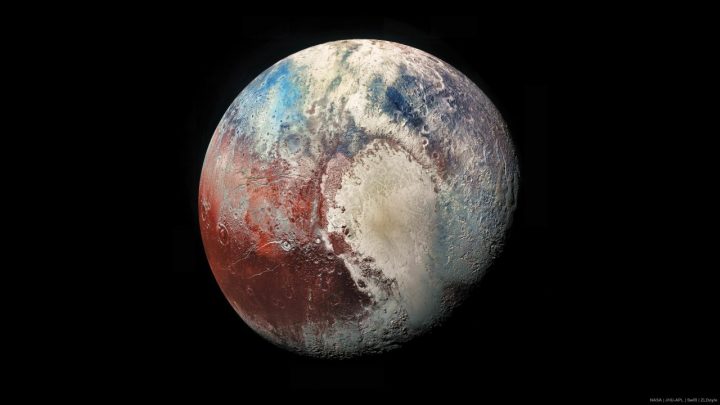
Pluto
Pluto is the second-most massive known dwarf planet, after Eris. It is the largest object in the Kuiper belt and possibly the largest known trans-Neptunian object by volume. It is the tenth-most-massive known body directly orbiting the Sun. Like other Kuiper belt objects, Pluto is primarily made of rock and ice, and is relatively small- about 1Ú6 the mass of the Moon and 1Ú3 its volume. It has a...
jericho
Jericho is a city located near the Jordan River in the West Bank of the Palestinian territories. It is the capital of the Jericho Governorate and has a population of more than 20,000. Situated well below sea level on an east-west route 16 kilometres (10 mi) north of the Dead Sea, Jericho is the lowest permanently inhabited site on earth. It is also believed to be one of the oldest continuously...
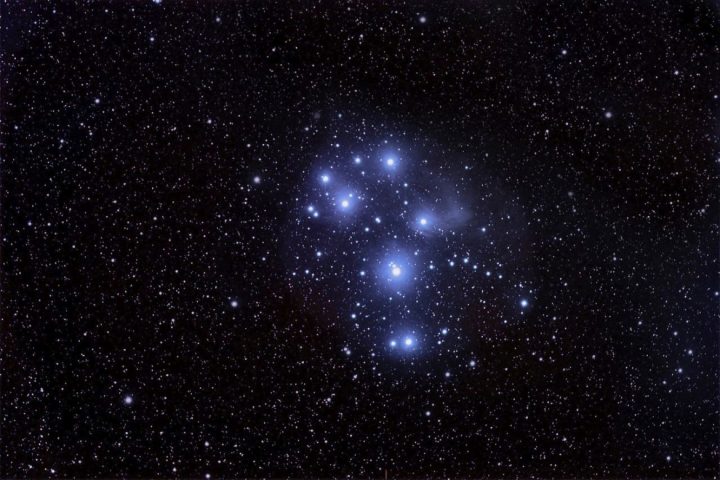
Pleiades
The Pleiades also known as the Seven Sisters and Messier 45), are an open star cluster containing middle-aged, hot B-type stars located in the constellation of Taurus. It is among the nearest star clusters to Earth and is the cluster most obvious to the naked eye in the night sky. The cluster is dominated by hot blue and extremely luminous stars that have formed within the last 100 million years...
israel
There is always something magical about the journey of the Hebrew bloodline forever seeking freedom and a homeland. The Hebrew alphabet is laced with symbols of light and codes that speak of the nature of reality. As with all ancient civilizations, we find a connection to gods in chariots who visited and guide. Today we connect with with UFO’s and alien creators as humanity forever seeks...
hittites
Hittites is the conventional English-language term for an ancient people who spoke an Indo-European language and established a kingdom centered in Hattusa (Hittite Hattushash) where today is the village of BoazkÐy in north-central Turkey, through most of the second millennium BC. The Hittite kingdom, which at its height controlled central Anatolia, north-western Syria down to Ugarit, and...